global traveler, Writer & community builder on a mission to awaken the world. join the adventure.
Tralaeng Kaeng Pagoda: Ancient Temple in Cambodia’s Forgotten Capital
Tucked away in the southern reaches of Cambodia lies Tralaeng Kaeng Pagoda, a site steeped in history and quiet significance. Many travelers overlook this humble temple, but for those interested in the story of Cambodia’s ancient capitals, it is a must-see landmark.
SACRED TRAVELSCAMBODIA
Xtinna
12/17/20252 min read


If you find yourself in Cambodia, consider a stop at Tralaeng Kaeng Pagoda—where history, hospitality, and hope meet under the golden spires of an ancient city.
Tucked away in the southern reaches of Cambodia lies Tralaeng Kaeng Pagoda, a site steeped in history and quiet significance. Many travelers overlook this humble temple, but for those interested in the story of Cambodia’s ancient capitals, it is a must-see landmark.
A Glimpse into Cambodia’s Past
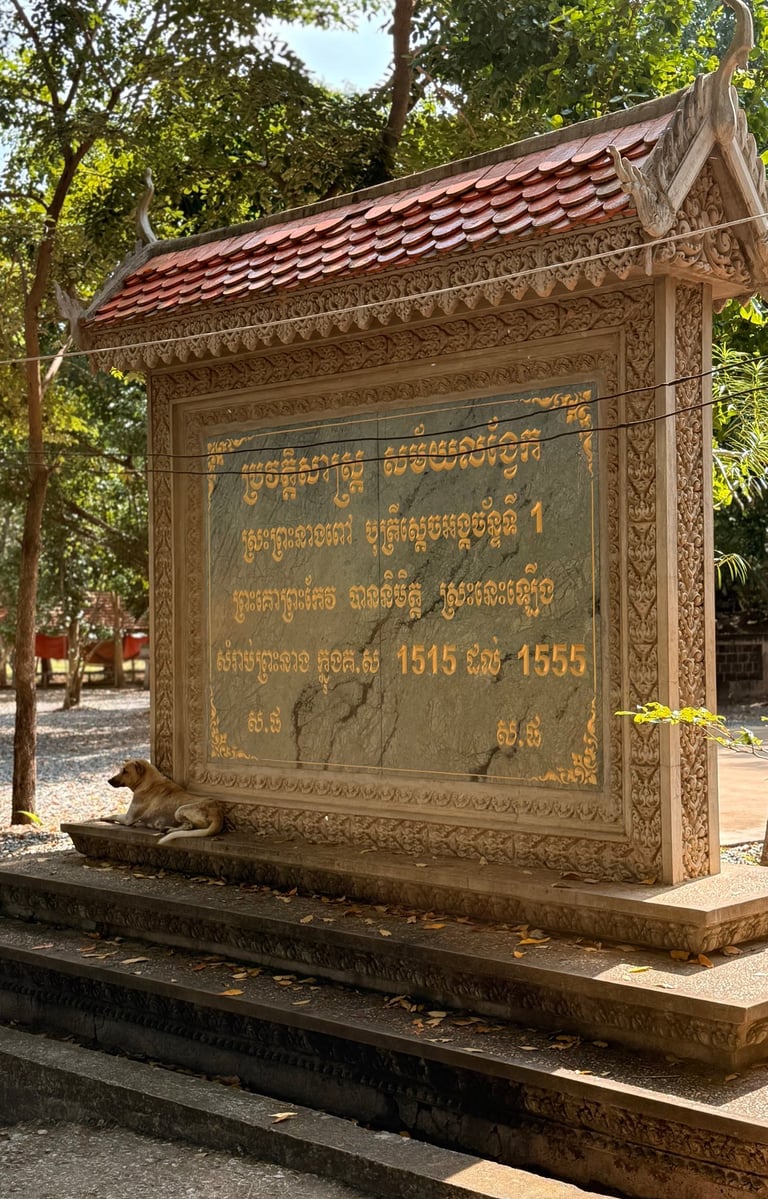
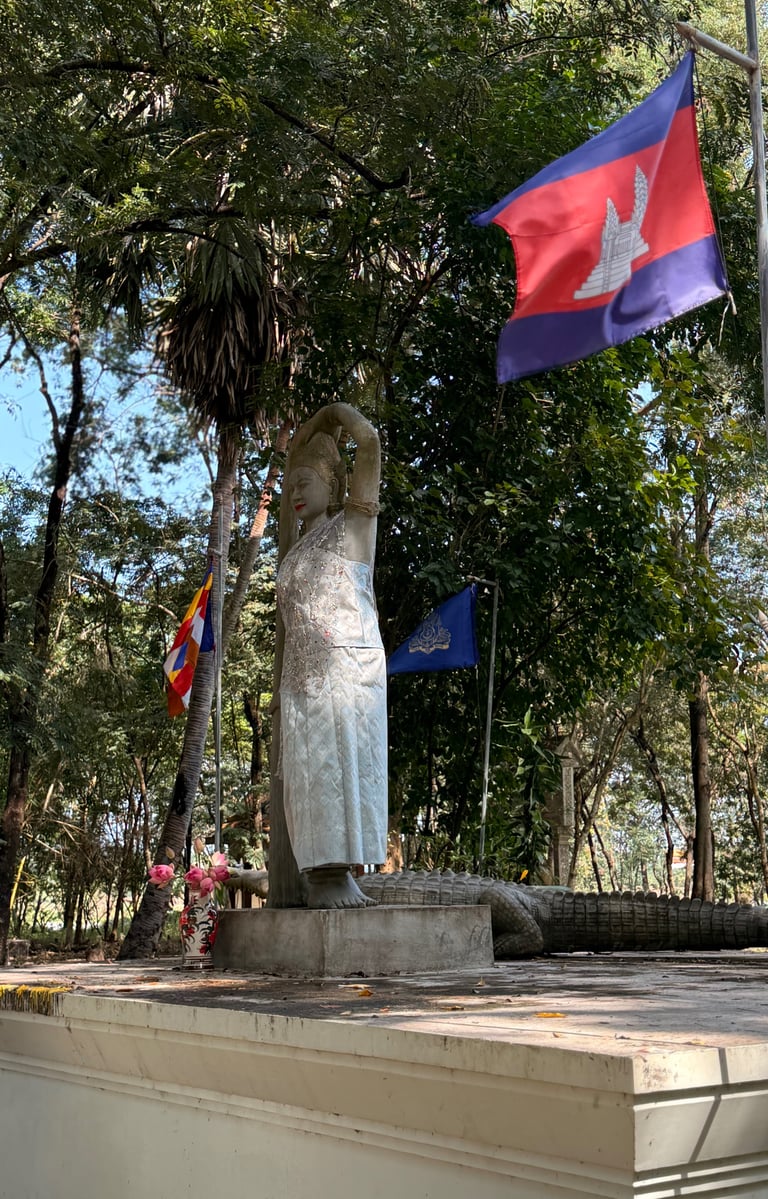
Tralaeng Kaeng Pagoda stands on land that once formed the heart of an old Cambodian capital, Longvek. Long before Phnom Penh rose to prominence, this area was a center of power and culture. The remnants of ancient city walls and scattered artifacts hint at a time when kings, monks, and commoners gathered here, shaping the early identity of the Khmer nation.
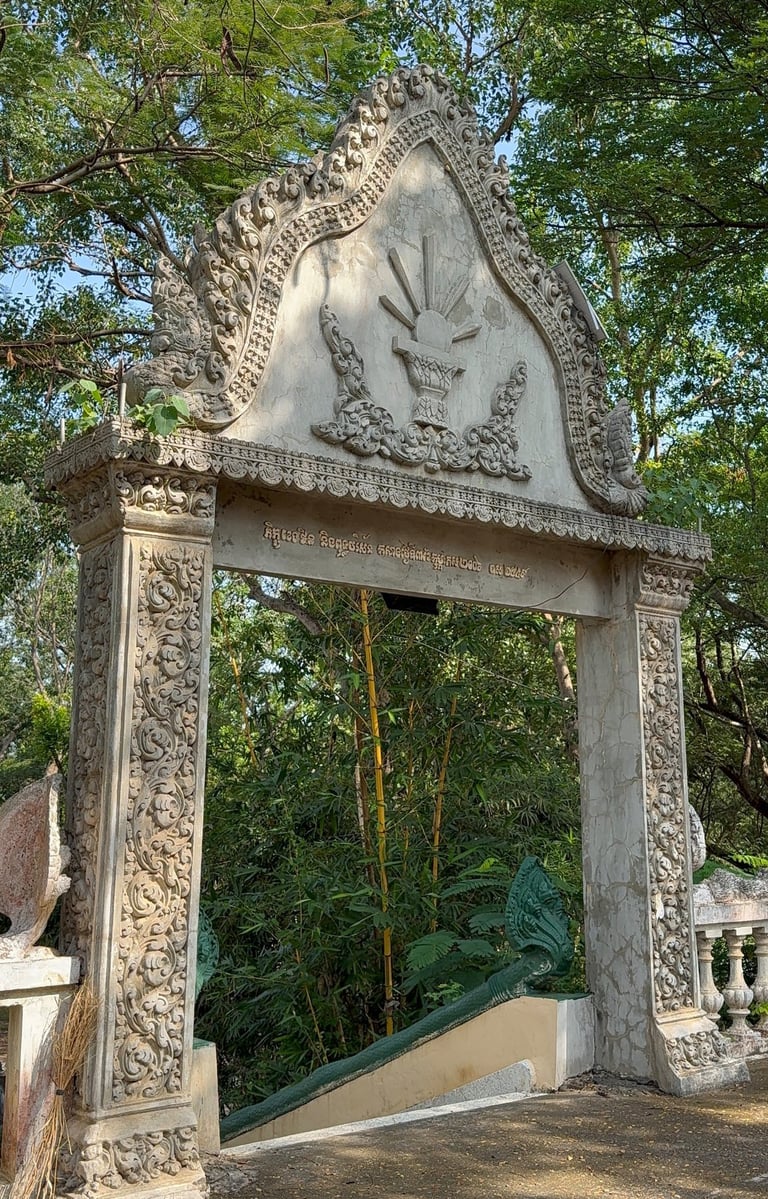
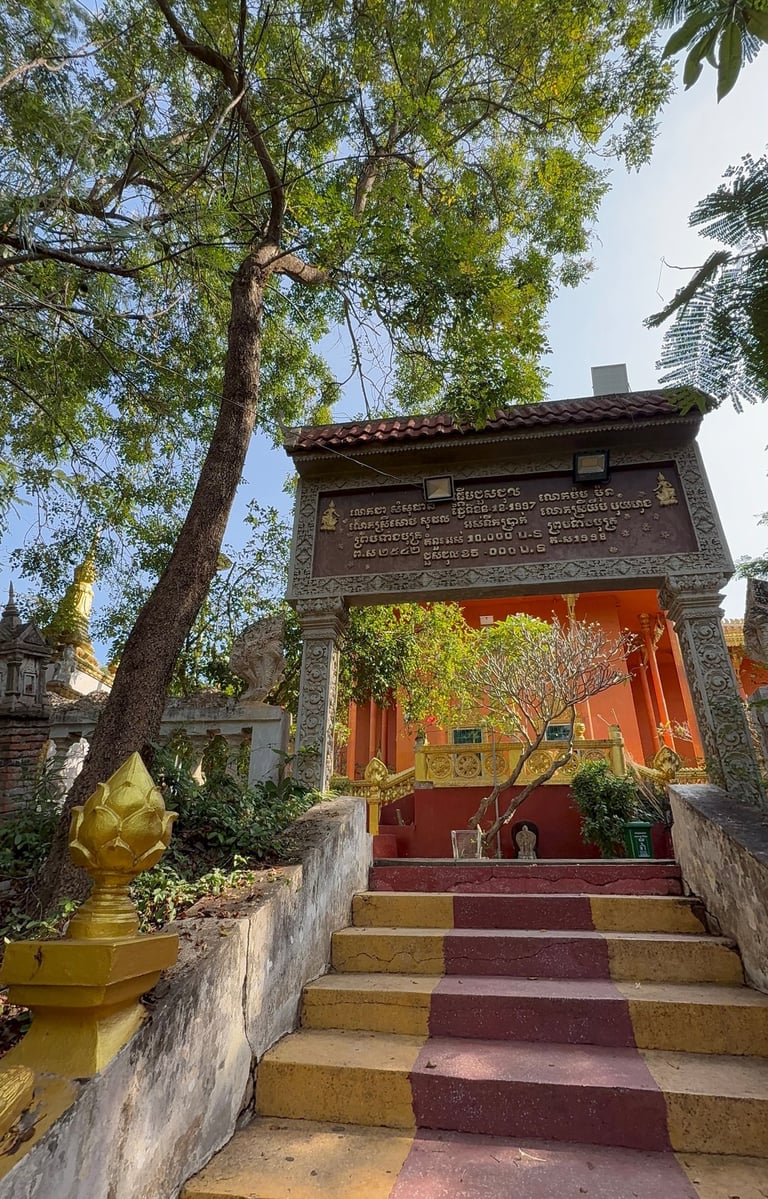
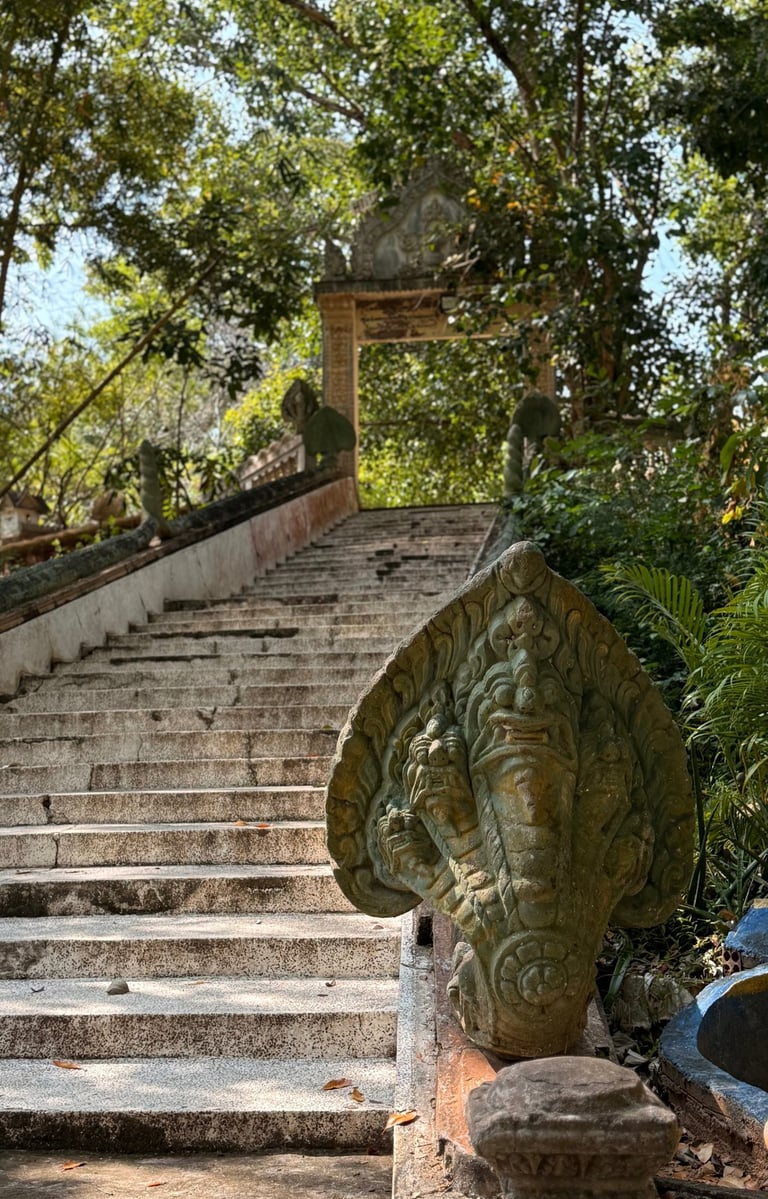
Today, Tralaeng Kaeng Pagoda is more than a religious site—it is a living connection to Cambodia’s past. While much of the original city has faded into history, the pagoda remains, preserving the spiritual traditions that have long defined Cambodian life. Its golden stupa and serene courtyards invite visitors to reflect on the passage of centuries and the enduring importance of faith in the country’s story.
A Warm Welcome Across Languages
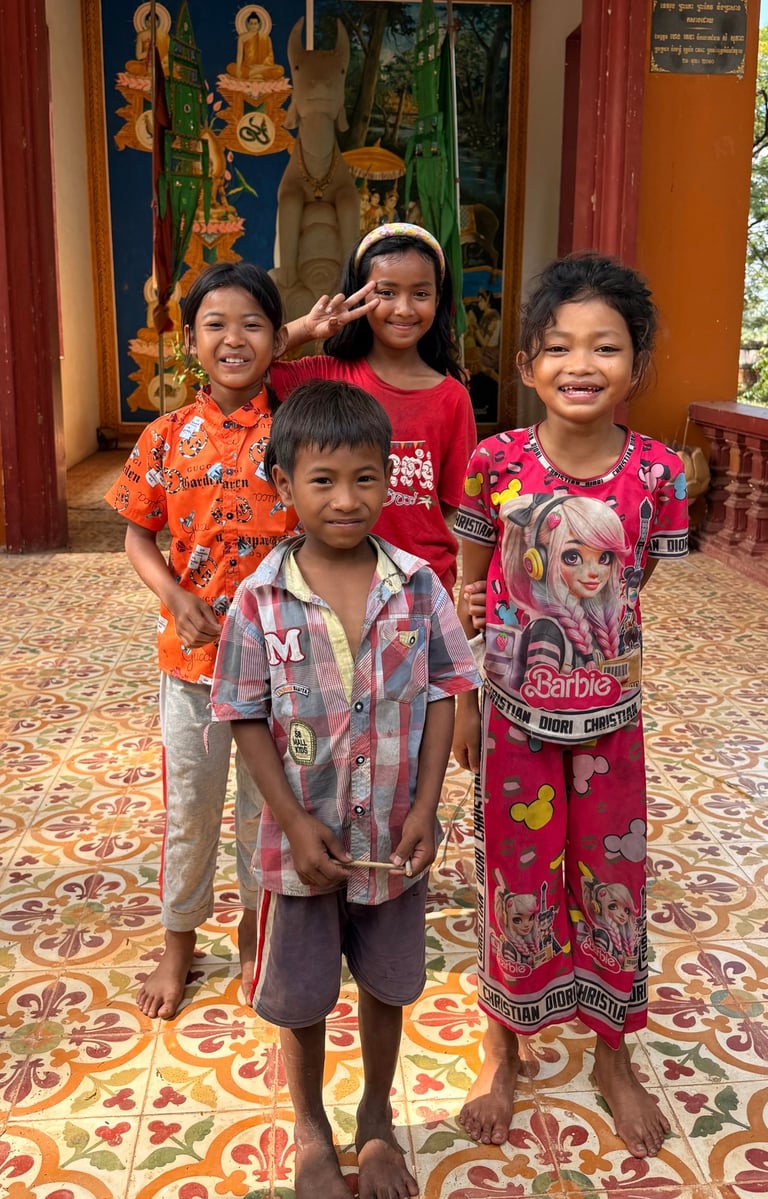
During my visit, I encountered a local lady tending to the temple grounds. Her smile was genuine and welcoming, a reminder of the unfailing hospitality that defines Cambodia’s people. Though she spoke no English, technology bridged our worlds: using Google Translate, we exchanged greetings and gratitude. Her pride in the pagoda and its history shone through, transcending language barriers.
Sacred Relics of the Past: Buddha’s Feet
At Tralaeng Kaeng Pagoda, one of the most unique and revered features is the depiction of Buddha’s feet, often referred to as “Buddha footprints.” These sacred imprints are a significant part of Buddhist art and tradition across Southeast Asia, including Cambodia.
During its hayday, the ancient capital of Longvek had a a huge four-sided sandstone statue of Buddha that watched over the valley. Today, onyl the feet remain, inside the main temple. Devotees often visit these sacred footprints to pay their respects, make offerings, and seek blessings. Some believe that touching or praying at the Buddha’s feet brings good luck, protection, and spiritual merit.
Buddha’s footprints, or “Buddhapada,” symbolize the physical presence of the Buddha on earth, even after his passing into Nirvana. They are reminders of his teachings and his journey, and serve as a focal point for devotion and meditation. The footprints typically include symbolic markings, such as the Dharma wheel (Dharmachakra) or lotus flowers, representing purity, enlightenment, and the path to spiritual awakening.
Longvek, the ancient capital city
Longvek, sometimes spelled Lovek or Lavek, served as Cambodia’s capital from the mid-16th to early 17th century, following the fall of Angkor. King Ang Chan I established Longvek as the new seat of government in 1553, positioning it north of today’s Phnom Penh near the Tonle Sap River—a strategic location for trade and defense.
As Cambodia’s political and cultural center, Longvek was home to the royal court, scholars, monks, and artists. Buddhism thrived, and the city became a hub of learning and religious activity. Longvek also welcomed foreign traders and missionaries, especially from Portugal and Spain, introducing new influences to Cambodian society.
Longvek’s prominence ended in 1594 when the Siamese (Ayutthaya) captured the city, leading to another period of instability. The capital later moved to Oudong, then Phnom Penh. Today, Longvek is a modest rural area, but its legacy as a resilient and cosmopolitan capital remains an important chapter in Cambodia’s history.